Micro Sound for Macro Effect
Finding a Shared Language for UX Audio
Kristine Botros · Sound designer & Strategy
How can we talk about sound with the same clarity that we use to describe colors, shapes, and feelings? This is a question that continuously drives our work at Plan8, and it became the core focus of my master thesis in music production at the Royal College of Music in Stockholm.
As music producers and sound designers navigating the space between art and commercial design, we frequently act as translators. Our job is to take abstract brand values or verbal briefs, and turn them into a few milliseconds of functional audio. But trying to explain why a specific notification sound feels "right" can be incredibly difficult when words fall short. To bridge this gap, we at Plan8 continuously employ a structured tool: an archetype based model for sound design.
Translating Emotion into Audio
Drawing on Carl Jung's theories of universal psychological patterns, we created a streamlined model featuring six emotional archetypes specifically adapted for sound: Dynamic, Confident, Competent, Caring, Friendly, and Carefree. By assigning these emotional categories to micro sounds, we aimed to create a shared vocabulary between producers, strategists, and clients.
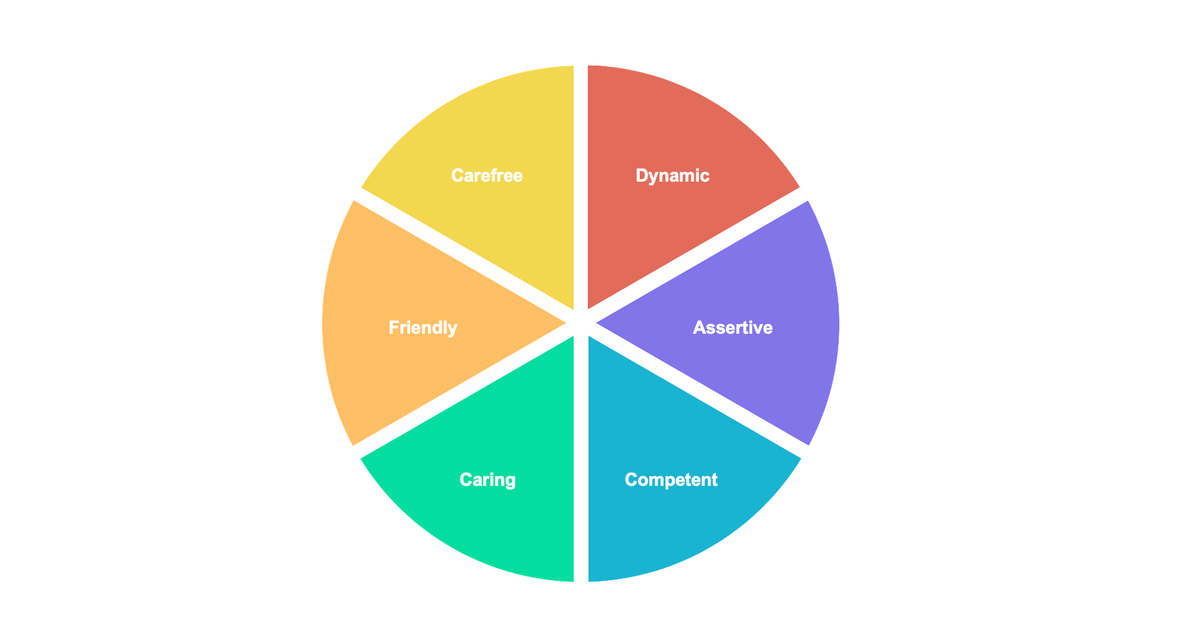
But a model is only as good as its real world application. For my master thesis, I wanted to test the limits of this framework: if we strip away all visual context and interactive cues, can an everyday listener intuitively recognize the emotional identity of a split second sound?
To find out, we conducted a blind audio survey with 100 participants who had no professional background in sound design. They were asked to listen to custom UX sounds and categorize them into four of our archetypes: Dynamic, Competent, Caring, or Carefree.
The Power of Timbre and Context
The results were both validating and surprising. Some sonic identities proved to be universally understood. For instance, sounds we designed to be Carefree were consistently identified correctly, with listeners describing them as playful, light, happy, and unexpected.
However, the lines blurred when it came to the Dynamic and Caring archetypes, which listeners frequently confused with one another. This revealed an incredible nuance in human perception: a sound designed to be Caring might feature warm, organic tones like wood or glass. But if that same warm sound has a sharp, bright attack or a high pitch as it rings out, listeners suddenly perceive it as energetic and Dynamic.
This proved a crucial point in my research: we cannot rely on broad categories alone. Subtle sonic qualities like timbre, attack curve, and frequency distribution completely alter how a micro sound makes us feel. Furthermore, we know that a UX sound's identity is deeply relational, as its true meaning often only emerges when it is placed in a sequence or alongside a broader family of sounds within a digital ecosystem.
The Future of Commercial Sound
What does this mean for the future of digital products? It shows us that UX audio is not just a functional afterthought, it is a powerful tool for emotional communication. A well crafted sound does not just confirm an action, it builds trust, clarity, and brand identity on a subconscious level.
Today's commercial world is hungry for more than just good aesthetics, as brands are actively seeking data driven insights into how sound influences user behavior and experience. Moving forward, the most successful sonic identities will be born at the intersection of artistic intuition and cognitive research. Ultimately, designing audio for digital interfaces is about creating sounds that do not just work technically, but intuitively communicate feeling, function, and identity in the blink of an eye.